Size, shape and texture decide how safe a bite is.
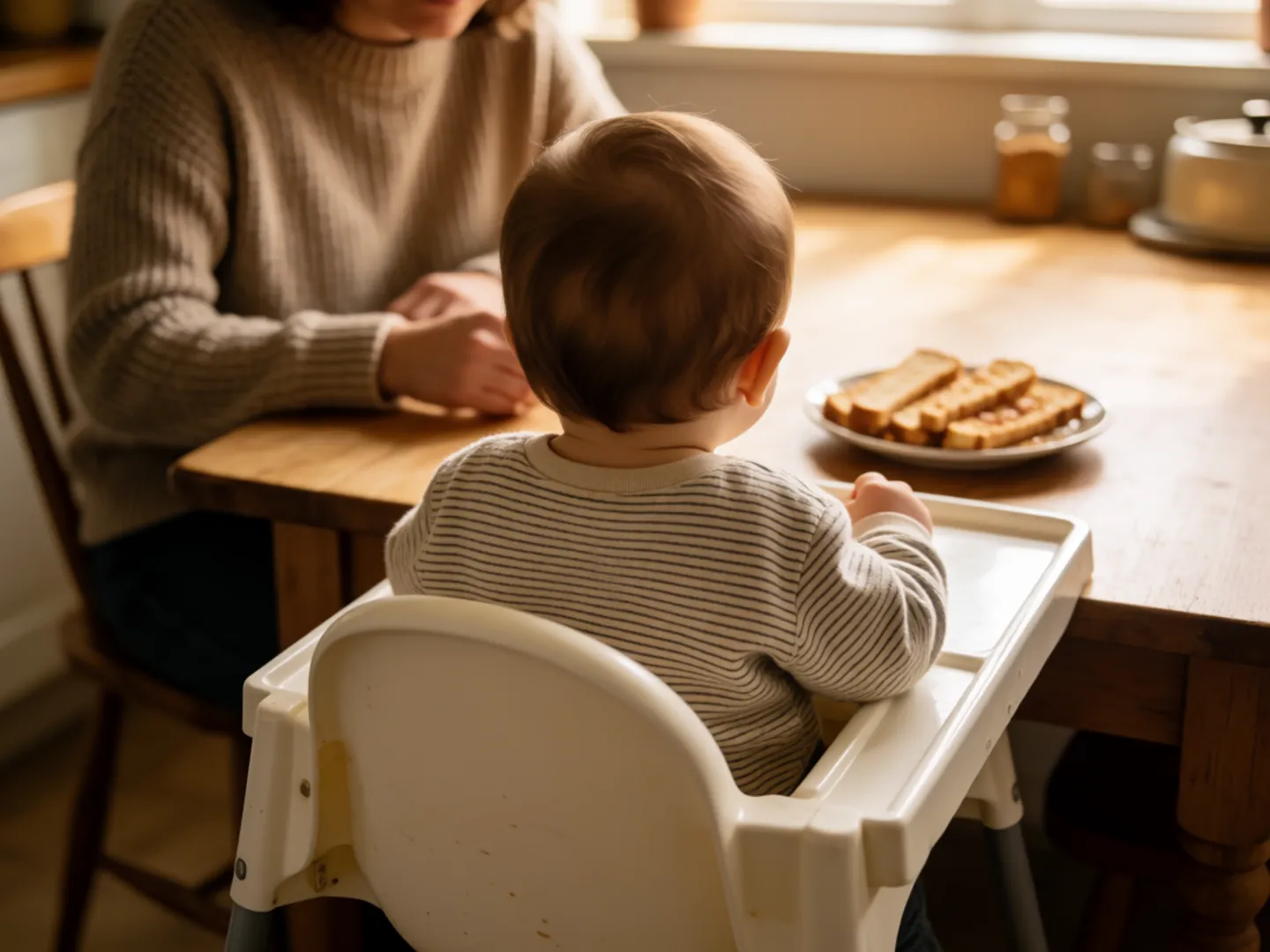
Babies start solid food at around 6 months and love to feed themselves. NHS and early years guidance comes back to a few simple habits: quarter the round foods, slice or soften the firm ones, and always stay at the table.
General information only, not professional safety advice. If someone is in immediate danger, call the emergency services.
A QUICK FOOD CHECK
How should I serve it?
Pick a common finger food to see how NHS and early years guidance says to prepare it for under-fives. The bar shows how much preparation the guidance asks for.
Based on NHS Best Start in Life and Department for Education guidance. This is general information, not personal medical advice.
TWO NUMBERS WORTH KNOWING
Small airways, round foods.
One age limit from NHS guidance, one finding from a Scottish hospital report.
5 years
Age before whole nuts are given
The NHS says whole nuts should not be given to children under 5 because they can choke on them. Department for Education guidance adds whole seeds, popcorn and hard sweets.
WHOLE NUTS · NHS
3 cases
Children described in one hospital report
Doctors at Aberdeen Royal Infirmary described three children treated after inhaling whole grapes, and wrote that whole grapes are ideally suited to block a young child's airway.
GRAPES · ARCH DIS CHILD 2017
The Aberdeen authors called their report a plea for awareness: knowledge that grapes and similarly shaped foods are a choking hazard is not widespread. NHS and Department for Education guidance now says to cut small round foods lengthways and into quarters.
FOUR HABITS FOR THE CHOPPING BOARD
Prep once, worry less.
None of these needs special kit, just a knife, a board and a few seconds more at the counter.
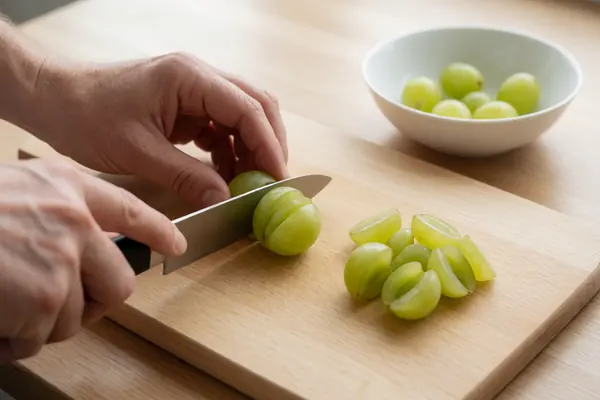
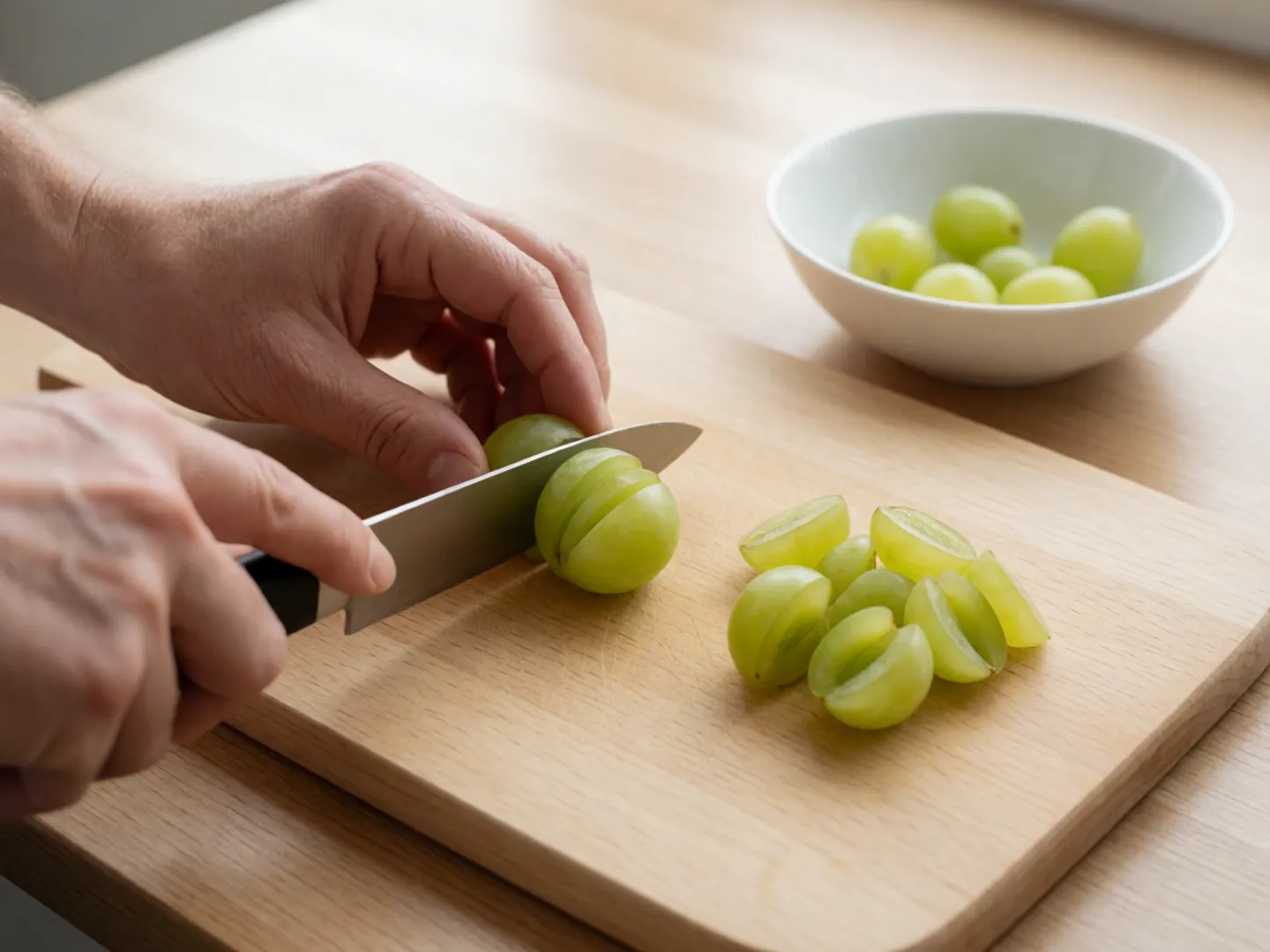
Quarter the round foods
Grapes, cherry tomatoes, cherries and strawberries go lengthways into four small pieces.
Think batons, not cubes
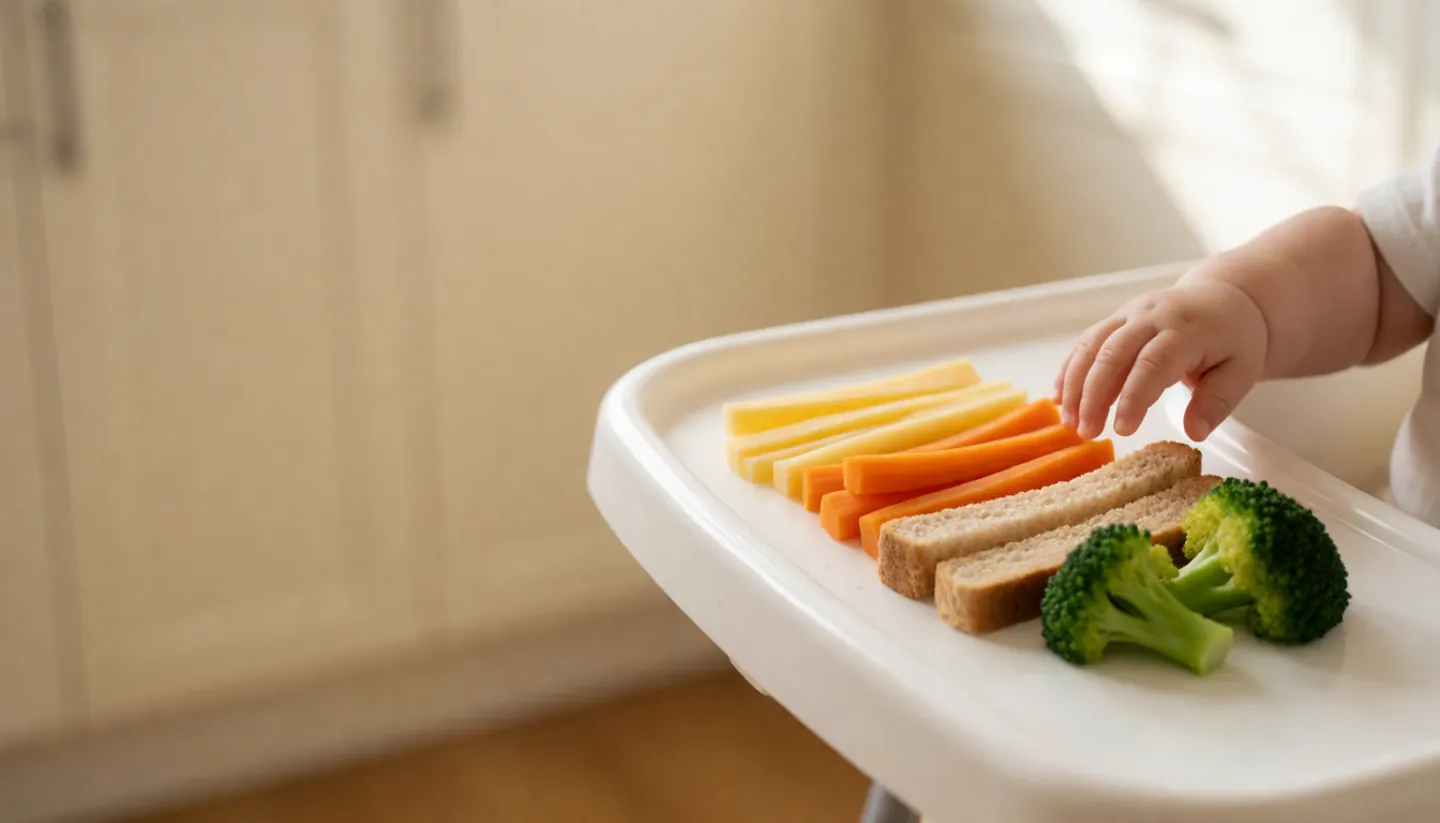
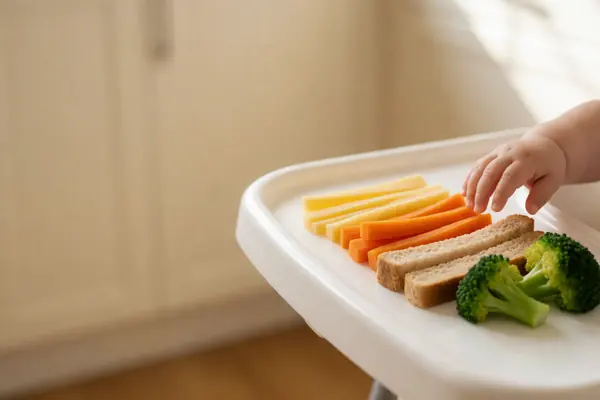
Cut vegetables, cheese, bread and meat into narrow strips that small hands can hold.
Soften the hard ones
Steam or simmer carrot, broccoli and apple until soft, and take the skins off when babies first try them.
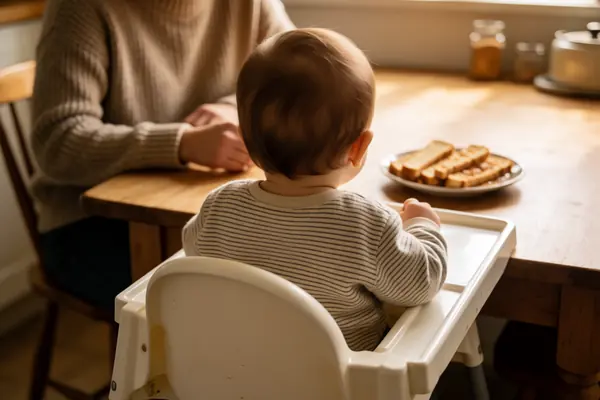
Sit down together
Keep children seated upright and stay with them; babies copy how you chew and swallow.
AI-generated image, not a photograph of a real person or place.AI-generated image, not a photograph of a real person or place.
GAGGING OR CHOKING?
Gagging is loud, choking is quiet.
The NHS says gagging is a normal reflex as babies learn to move food around their mouths. Their eyes may water, they may push their tongue forward or retch, and it is usually noisy.
Choking is different and can be silent, which is why guidance says to always stay with a child who is eating. The NHS has step-by-step advice on what to do if a child is choking, and first aid courses teach it in person.
Questions
Questions people ask
When can my baby start finger foods?
The NHS says solid foods should start at around 6 months, when a baby can sit and hold their head steady, pick food up and put it in their mouth, and swallow it. Babies can move on to mashed, lumpy and finger foods as soon as they can manage them.
Is halving grapes enough?
NHS and Department for Education guidance says to cut small round foods like grapes and cherry tomatoes lengthways and into quarters (4 small pieces), and to remove pips and stones.
Can babies have peanuts?
The NHS says crushed or ground nuts, and nut butter spread on a food such as toast, can be given from around 6 months. Whole nuts should not be given to children under 5. If there is a family history of allergies, talk to your GP or health visitor first.
Why is white bread mentioned?
NHS guidance says white bread that is not chewed properly can form a ball with a dough-like texture in the throat. It suggests lightly toasting white bread or using brown bread, cut into narrow strips.
Are some snacks best avoided altogether?
Department for Education guidance for early years settings says not to give children popcorn, marshmallows, jelly cubes from a packet or hard sweets, and not to offer whole raisins as a snack under 12 months.